

If your project is located in Russia, Kazakhstan, Ukraine, or other CIS countries, there is a strong chance your piping specification will require GOST flanges. However, outside these regions, GOST standards remain poorly explained in English, and most online resources are either repetitive or too general for real procurement.
Written from a flange manufacturer's perspective, this guide explains what GOST truly means, how different standard numbers connect, what changed in the 2015 revision, and how GOST compares with ANSI B16.5 and DIN/EN 1092-1 in practical project applications.
What Does GOST Mean?
GOST is an acronym for Gosudarstvennyy Standart (Государственный Стандарт), which translates directly to 'State Standard' in English. It is the national standardization system originally developed in the Soviet Union and now maintained by the Euro-Asian Council for Standardization, Metrology and Certification (EASC) - an intergovernmental body covering Russia and most former Soviet republics.
GOST standards cover a wide range of industrial products. For piping systems, GOST defines the dimensional, material, pressure-temperature, and testing requirements for flanges used in oil and gas pipelines, chemical plants, water treatment systems, and power generation facilities across the CIS region.
GOST Flange Standard Numbers: Which One Actually Applies?
This is where most buyers get confused - and understandably so. Over the decades, several separate GOST standards governed different flange types. The most important thing to know is that GOST 33259-2015 is the current consolidated standard that supersedes the older individual documents for most applications.
|
Standard No. |
Type Covered |
Year |
Status |
|
GOST 12820-80 |
Plate Flange (Slip On type) |
1980 |
Superseded by GOST 33259 |
|
GOST 12821-80 |
Weld Neck Flange |
1980 |
Superseded by GOST 33259 |
|
GOST 12836-67 |
Blind Flange |
1967 |
Superseded by GOST 33259 |
|
GOST 12815-80 |
Flange Face Dimensions |
1980 |
Superseded by GOST 33259 |
|
GOST 33259-2015 |
All flange types (consolidated) |
2015 |
✅ Current |
In practice, many older projects and long-running facilities still reference the 1980-era standards. If you receive a drawing marked GOST 12821-80, it refers to the old weld neck flange standard - the dimensions are still valid and widely used, but the current equivalent is covered under GOST 33259-2015. Always check your project specification to confirm which edition is required.
In our experience, about 60–70% of export inquiries we receive still reference the old 1980 standard numbers - particularly GOST 12820 and 12821. This is not wrong, but it is worth confirming with the end client whether the 2015 edition is acceptable as a direct replacement.
GOST Flange Types
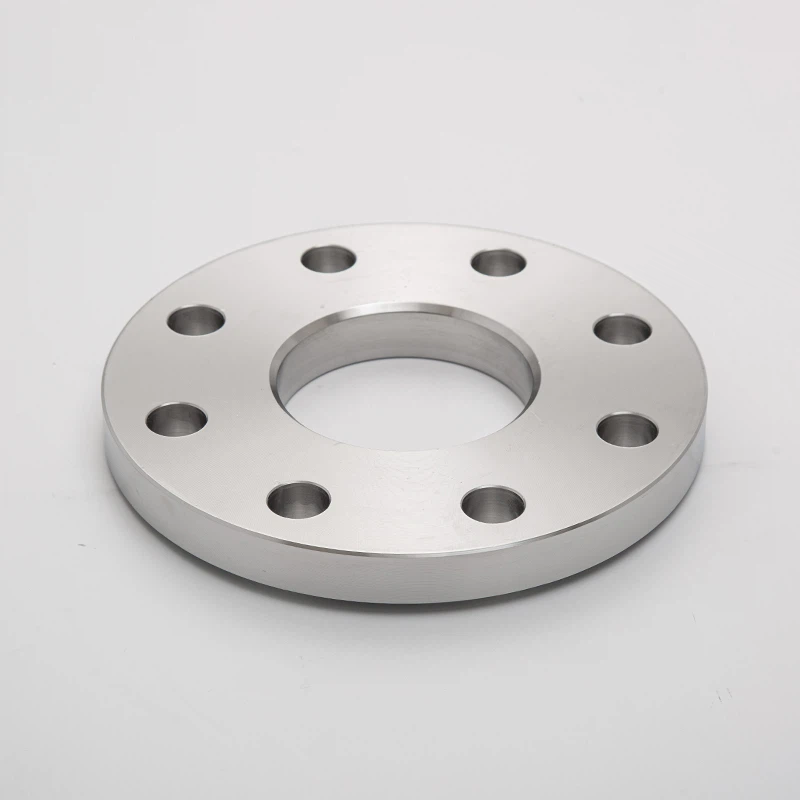
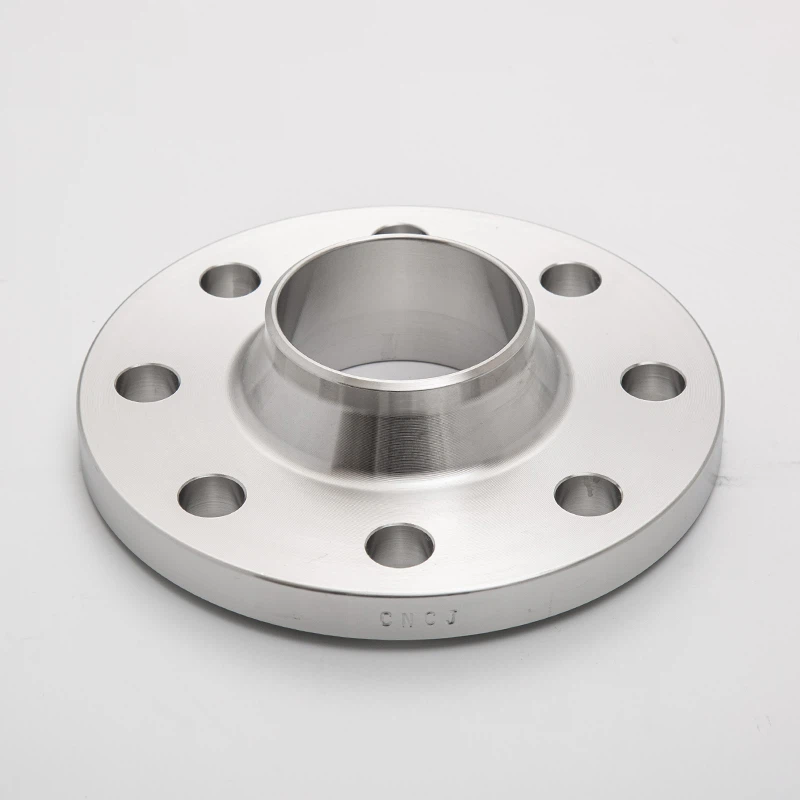
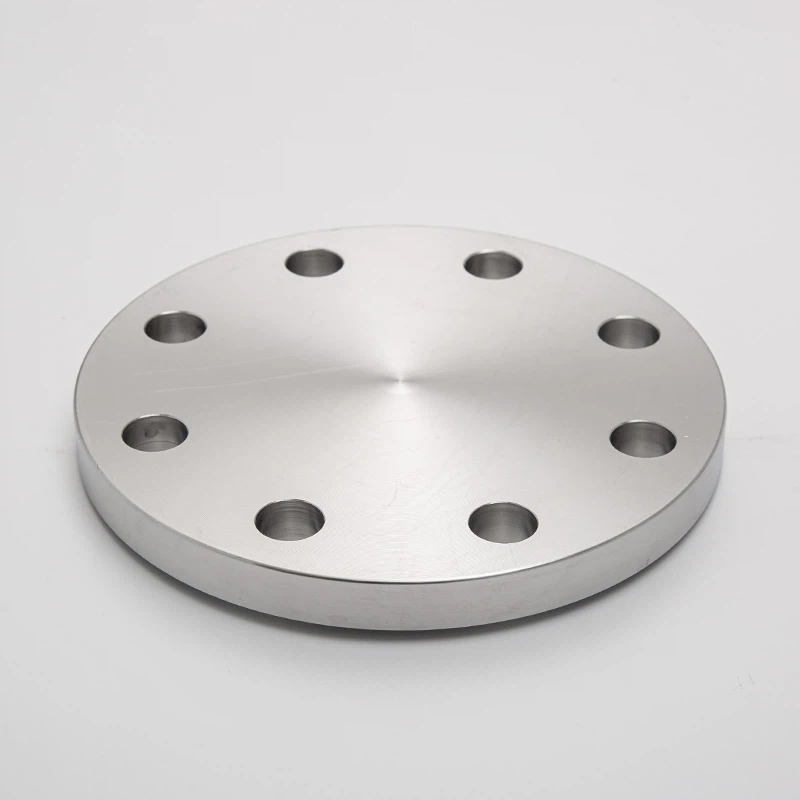
GOST 33259-2015 covers the following flange connection types. The naming conventions differ slightly from ANSI and DIN, so it helps to know the equivalents:
|
GOST Type |
ANSI Equivalent |
Typical Application |
|
Flat Flange (Plate) |
Slip On Flange |
Low-pressure water, HVAC |
|
Weld Neck Flange |
Weld Neck Flange |
High-pressure oil & gas pipeline |
|
Blind Flange |
Blind Flange |
Pipeline end closure |
|
Threaded Flange |
Threaded Flange |
Small-bore, low pressure |
|
Lap Joint Flange |
Lap Joint Flange |
Frequent disassembly applications |
|
Spectacle Blind |
Spectacle Blind |
Pipeline isolation & maintenance |
Among these, weld neck and flat (plate) flanges are by far the most commonly ordered types for CIS industrial projects. Spectacle blinds are worth noting - they are widely used in Russian oil and gas facilities but often overlooked by suppliers outside the region.
GOST Flange Pressure Ratings (PN Classes)
GOST uses the PN (Pressure Nominale) system - the same notation as DIN and EN standards. This is one area where GOST and European standards look similar on the surface, but the actual pressure-temperature ratings and dimensional data are not the same.
|
PN Class |
Nominal Pressure |
Approx. PSI |
Typical Use |
|
PN 2.5 |
2.5 bar |
36 psi |
Very low pressure water |
|
PN 6 |
6 bar |
87 psi |
Water supply, heating |
|
PN 10 |
10 bar |
145 psi |
General industrial |
|
PN 16 |
16 bar |
232 psi |
Most common class |
|
PN 25 |
25 bar |
363 psi |
Medium pressure |
|
PN 40 |
40 bar |
580 psi |
High pressure process |
|
PN 63 |
63 bar |
914 psi |
High pressure gas |
|
PN 100 |
100 bar |
1,450 psi |
Very high pressure |
|
PN 160 |
160 bar |
2,321 psi |
Extreme pressure |
|
PN 250 |
250 bar |
3,626 psi |
Extreme pressure |
PN 16 and PN 40 are the two most frequently specified classes in CIS projects - covering the majority of oil and gas, chemical, and water treatment applications. If you are unsure which class to specify, PN 16 is the most common starting point for general-service pipelines.
GOST Flange Dimensions & Size Range
GOST flanges use the DN (Diameter Nominal) system and metric dimensions throughout - all measurements are in millimetres. The size range under GOST 33259-2015 runs from DN 10 to DN 1600, making it one of the widest-range flange standards available.
The table below shows key dimensional parameters for GOST flat and weld neck flanges at PN 16 - the most commonly ordered class - for selected sizes:
|
DN |
Flange OD (mm) |
Bolt Circle (mm) |
Bolt Holes |
Bolt Hole Dia (mm) |
Flange Thickness (mm) |
|
DN 15 |
95 |
65 |
4 |
14 |
14 |
|
DN 25 |
115 |
85 |
4 |
14 |
16 |
|
DN 50 |
165 |
125 |
4 |
18 |
20 |
|
DN 80 |
200 |
160 |
8 |
18 |
24 |
|
DN 100 |
235 |
190 |
8 |
18 |
24 |
|
DN 150 |
300 |
250 |
8 |
22 |
28 |
|
DN 200 |
360 |
310 |
12 |
22 |
32 |
|
DN 300 |
485 |
430 |
12 |
22 |
38 |
|
DN 400 |
620 |
560 |
16 |
26 |
46 |
|
DN 600 |
840 |
770 |
20 |
30 |
55 |
Note: Dimensions shown are for PN 16 flat (plate) flanges per GOST 33259-2015. Weld neck and blind flange dimensions vary. Contact CNCJ for complete dimension tables across all PN classes. sale@cncjflange.com
GOST Flange Material Grades
One of the most practical challenges in sourcing GOST flanges internationally is decoding the Russian material designations. The naming system is completely different from ASTM or EN standards, which creates confusion during procurement - especially when a project specifies a Russian steel grade but the manufacturer works primarily with ASTM materials.
A common mistake we see in procurement is assuming that matching a chemical composition is enough to confirm material equivalency. In reality, the manufacturing process, heat treatment, and testing requirements also need to align. Always request a material test certificate (MTC) and verify against the specific GOST material standard.
|
GOST Grade |
Nearest ASTM Equivalent |
Nearest EN Equivalent |
Key Characteristics |
|
Ст20 (St20) |
ASTM A105 / A106 Gr.B |
P235GH |
Most common carbon steel; general service |
|
09Г2С (09G2S) |
ASTM A516 Gr.70 |
P355NL1 |
Low-temp carbon steel; -70°C rated |
|
12Х18Н10Т (12Kh18N10T) |
ASTM A182 F316Ti |
1.4571 (316Ti) |
Stabilized SS; high-temp & corrosive service |
|
08Х18Н10Т (08Kh18N10T) |
ASTM A182 F304 |
1.4301 (304) |
General-purpose austenitic SS |
|
10Х17Н13М2Т |
ASTM A182 F316 |
1.4436 (316) |
Mo-bearing SS; improved corrosion resistance |
|
15Х5М (15Kh5M) |
ASTM A182 F5 |
- |
Cr-Mo alloy; high-temp refinery service |
St20 (carbon steel) and 12Kh18N10T (stainless steel equivalent to 316Ti) are the two most frequently specified grades for GOST flanges in export projects. The stabilized titanium-bearing grade 12Kh18N10T is preferred over the basic 304/316 equivalent in high-temperature CIS applications because of its better resistance to intergranular corrosion after welding.
GOST vs ANSI B16.5: Key Differences
This is the comparison that comes up most often when a project transitions between regions - for example, when a CIS client wants to connect new ANSI-compliant equipment to an existing GOST pipeline. The short answer is: they are not interchangeable, even when the pressure ratings look similar.
|
Parameter |
GOST (33259-2015) |
ANSI B16.5 |
|
Origin |
Russia / CIS |
USA (ASME/ANSI) |
|
Unit System |
Metric (mm, bar) |
Imperial (inch, psi) |
|
Pressure Notation |
PN (bar) |
Class (150/300/600…) |
|
Size Notation |
DN (mm) |
NPS (inch) |
|
Size Range |
DN 10–DN 1600 |
NPS ½–NPS 24 (B16.5) |
|
Pressure Range |
PN 2.5–PN 250 |
Class 150–Class 2500 |
|
Bolt Holes |
Metric bolt pattern |
Imperial bolt pattern |
|
Material System |
GOST steel grades |
ASTM material specs |
|
Interchangeable? |
NO - different bolt patterns |
NO |
In most cases, the real problem arises not during procurement but during installation - when someone on site discovers that a new ANSI flange and an existing GOST flange have different bolt circle diameters and hole counts, even though both are rated PN 16 / Class 150. This mismatch is the most common compatibility issue we encounter in mixed-standard projects.
The approximate pressure class equivalencies below are useful for initial planning - but do not use these for direct substitution without confirming bolt patterns and face dimensions:
|
GOST PN Class |
Approx. ANSI Class |
Note |
|
PN 20 |
Class 150 |
Bolt holes do NOT match |
|
PN 50 |
Class 300 |
Bolt holes do NOT match |
|
PN 110 |
Class 600 |
Bolt holes do NOT match |
|
PN 150 |
Class 900 |
Bolt holes do NOT match |
GOST vs DIN/EN 1092-1: Are They Compatible?
Because both GOST and DIN/EN flanges use the PN designation and metric dimensions, it is tempting to assume they are interchangeable. They are not - and this assumption causes real problems on projects where European equipment is being connected to a GOST pipeline system.
The key differences are in bolt hole count and flange outside diameter. At DN 100 PN 16, for example, a GOST flange has 8 bolt holes on a 190 mm bolt circle, while a DIN EN 1092-1 PN 16 flange also has 8 holes but on a 180 mm bolt circle - a 10 mm difference that makes the two incompatible without an adapter.
Always verify the bolt circle diameter (PCD) and bolt hole count before specifying or ordering when mixing GOST with European-standard equipment. A simple dimensional check at the specification stage saves significant rework cost later.
GOST Flange Applications
GOST flanges are the standard choice for any project operating under Russian or CIS engineering codes. The most common application areas include:
- Oil & gas transmission pipelines in Russia, Kazakhstan, Azerbaijan, and Turkmenistan - where Transneft and Gazprom pipeline codes require GOST compliance
- Upstream and midstream facilities in CIS countries - including compressor stations, separator skids, and metering systems
- District heating networks (centralized hot water systems) across Russia and Eastern Europe - PN 16 and PN 25 flat flanges dominate this application
- Water treatment and municipal water supply infrastructure in CIS countries
- Chemical and petrochemical plants built under Soviet-era or GOST-compliant engineering standards, including maintenance and expansion projects
GOST flanges remain essential for any project operating under Russian or CIS engineering codes. Understanding the difference between the old 1980-era standards and the current GOST 33259-2015, knowing why GOST and ANSI flanges cannot simply be swapped despite similar pressure ratings, and being able to match Russian material grades to ASTM equivalents - these are the practical details that actually matter when placing an order or reviewing a project specification.
The standard is not complicated once you know the structure. The biggest mistake is treating GOST as a loose regional variation of DIN or ANSI. It is its own system, with its own dimensional logic, and it deserves to be specified correctly.
References & Sources
GOST 33259-2015: Flanges for fittings, vessels and pipelines at nominal pressure up to PN 250. Euro-Asian Council for Standardization (EASC).
GOST 12820-80: Steel flat-welding flanges. USSR State Standard (historical reference).
GOST 12821-80: Steel weld-on flanges. USSR State Standard (historical reference).
EN 1092-1:2018: Flanges and their joints - circular flanges for pipes, valves, fittings and accessories. European Committee for Standardization (CEN).
ASME B16.5-2017: Pipe Flanges and Flanged Fittings. American Society of Mechanical Engineers.
FAQ About GOST Flanges
Q: What does GOST stand for in flanges?
A: GOST stands for Gosudarstvennyy Standart, meaning 'State Standard' in Russian. In the context of flanges, it refers to the Russian national standard system that defines the dimensions, pressure ratings, materials, and testing requirements for pipe flanges used primarily in Russia and CIS countries.
Q: What is the difference between GOST 12820, GOST 12821, and GOST 33259?
A: GOST 12820-80 and GOST 12821-80 are older standards from 1980 that covered plate flanges and weld neck flanges respectively. GOST 33259-2015 is the current consolidated standard that replaced both, along with several other older documents. Many projects still reference the old numbers, but the current manufacturing standard is GOST 33259-2015.
Q: Can GOST flanges be used with ANSI flanges?
A: Not directly. Although certain GOST and ANSI pressure classes have similar nominal ratings (for example, GOST PN 20 ≈ ANSI Class 150), the bolt circle diameter, bolt hole count, and flange outside diameter are different. Direct mating is not possible without adapter flanges or custom transition pieces.
Q: What material is GOST 12Kh18N10T equivalent to?
A: GOST grade 12Kh18N10T (12Х18Н10Т) is the nearest Russian equivalent to ASTM A182 F316Ti and EN 1.4571. It is a titanium-stabilized austenitic stainless steel, commonly used in GOST flanges for high-temperature and corrosive service conditions. It offers better resistance to intergranular corrosion after welding compared to standard 316.
Q: Are GOST and DIN flanges interchangeable?
A: No. Both standards use the PN designation and metric units, which creates the impression of compatibility - but the bolt circle diameters and hole counts differ between GOST and DIN/EN 1092-1 flanges at the same DN and PN rating. Always verify PCD and bolt hole dimensions before mixing these two standards in the same pipeline system.