
In the global landscape of water treatment infrastructure, specifying the correct piping components is a complex task involving regulatory compliance, material compatibility, and long-term asset reliability. As suppliers of high-grade GOST flanges, we frequently address inquiries regarding their deployment in water treatment facilities. While often associated with the Eurasian market, GOST standards offer a robust and highly cost-effective solution for large-scale water projects, provided the engineering team understands their technical nuances.
The Engineering Basis of GOST Standards in Fluid Systems
GOST (Gosudarstvennyy Standart) provides a comprehensive framework for piping components. Unlike standards that focus heavily on general pressure-temperature ratings, GOST specifications are remarkably granular regarding specific material grades for liquid handling. For water treatment plants, where the fluid spectrum ranges from untreated raw water to highly chlorinated or chemically treated effluent, this granularity is an asset.
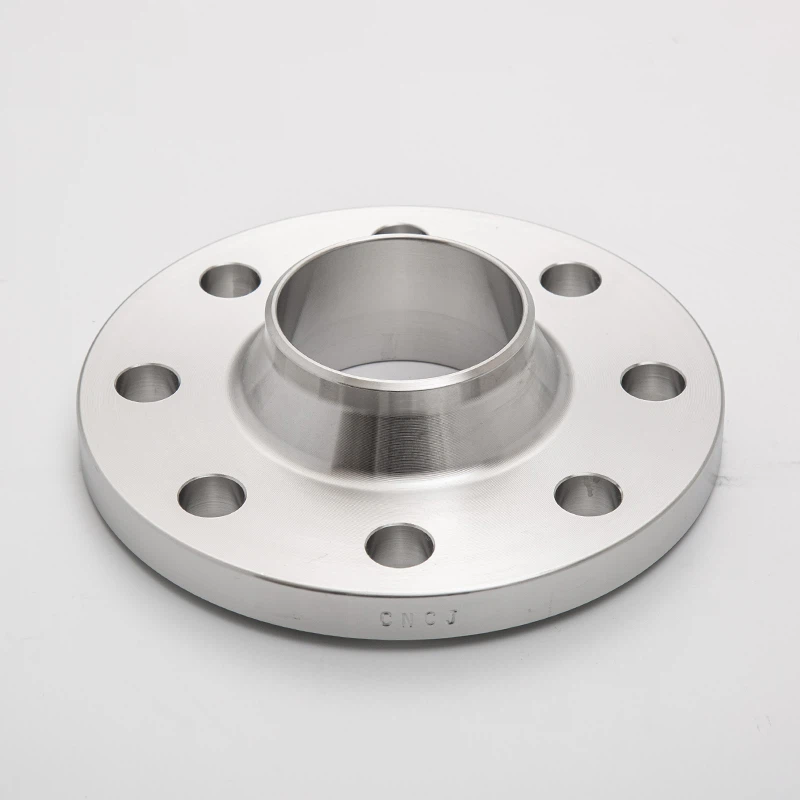
The primary types, including the Ss Plate Flange, Loosed Flange, and Weld Neck Pipe Flange, are designed with geometries that prioritize mechanical stability under hydraulic load.

Chemical Resistance and Metallurgical Selection
Water treatment facilities often utilize chemical dosing skids-injecting sodium hypochlorite, coagulants, or pH adjusters. A standard carbon steel flange, regardless of its pressure rating, will face rapid degradation in these environments.
When using GOST-compliant stainless steel components, we leverage the passive oxide layer's stability. In water treatment, the critical factor is the choice of material grade (e.g., 08X18H10T or its international equivalents like 321/304). By utilizing stainless steel GOST flanges, plants can effectively mitigate the risk of corrosion-induced leaks, which are both an environmental liability and a source of operational downtime.
Pressure/Temperature Integrity in Treatment Cycles
Water treatment is not a static process. It involves rapid thermal shifts-particularly during thermal disinfection or when processing industrial wastewater.
- Thermal Stability: GOST flanges are engineered to maintain structural integrity through thermal cycling. Unlike some lightweight standards, the wall thickness and bolt patterns defined in GOST specifications often provide a superior safety margin against deformation.
- Hydraulic Shock Resistance: Water hammer effects in large-diameter piping can induce massive stresses. The robust design of the Weld Neck Pipe Flange, when installed according to GOST mounting protocols, ensures that the connection remains seated even under significant pressure surges.
Overcoming the "International Compatibility" Challenge
The primary hesitation engineers face is the fear of "vendor lock-in" or incompatibility with existing ASME/DIN systems. However, this is largely a matter of planning:
- Flange Adapters: If your facility utilizes a mix of standards, specialized transition flanges or adapters are available.
- Dimensional Alignment: Many GOST dimensions overlap with international standards at specific pressure classes (e.g., PN 10/16/25). By comparing the bolt hole circle diameter (PCD) and the number of bolts, engineers can often achieve seamless integration.
- Technical Consultation: We provide detailed dimensional drawings that allow your team to verify compatibility before procurement, eliminating the risk of costly onsite rework.
Advantages of Standardization in Maintenance
The true value of utilizing a uniform GOST piping standard across a water treatment plant is the ease of lifecycle management.
- Predictable Maintenance: Because all components are manufactured to the same state-regulated dimensions, your maintenance team can maintain a standardized inventory of bolts, gaskets, and replacement flanges. This reduces the "parts sprawl" that often occurs in facilities where components are sourced from multiple disparate standards.
- Cost-Efficiency: By optimizing the manufacturing process for standardized GOST dimensions, we can offer pricing structures that are significantly more competitive than custom-fabricated components or parts sourced from high-cost international standard brands.
Ensuring Integrity: Installation Best Practices
No matter how high the quality of the Ss Plate Flange, the final performance is dependent on the installation team. For water treatment plants, we recommend:
- Surface Finishing: Ensure the flange mating surfaces are free of debris. Any imperfection, especially in stainless steel, can act as a catalyst for crevice corrosion.
- Gasket Selection: Use materials compatible with your specific water treatment chemicals (e.g., EPDM for water or PTFE for chemically aggressive flows).
- Torque Sequence: Use a calibrated torque wrench following the cross-pattern sequence to ensure even distribution of pressure across the gasket.
Why Choose Our GOST Piping Solutions?
Our commitment to quality extends beyond simply meeting the GOST standard. We ensure that our materials pass rigorous ultrasonic testing and pressure verification, making them ideal for the mission-critical nature of water purification.
Whether you are managing a municipal water treatment plant or an industrial wastewater processing facility, our catalog-featuring Loosed Flange designs for easy alignment and Weld Neck Pipe Flange options for high-pressure service-provides the durability you require.
If you are currently evaluating your piping infrastructure, we invite you to send us your project specifications. Our engineering team can provide a comprehensive compatibility analysis to ensure that incorporating GOST flanges will enhance your plant's operational reliability while optimizing your procurement budget.
Contact our technical support team today for a custom quote and full compliance documentation.